UPSTREAM STATE
A frozen TA-14 state is presented across the declared interface.
TA-14-AIGR-000029 · VELOS SYSTEMS · v1.0.0
Velos declares a Layer-4 deterministic enforcement substrate. The TA-14 examination question is narrower than the marketing claim: can a frozen inadmissible state cross the declared interface, be evaluated by native Velos logic, and be actively interdicted before the consequence crosses the declared execution boundary—with evidence proving prevention rather than observation?
01 · THE REGISTERED ARCHITECTURE
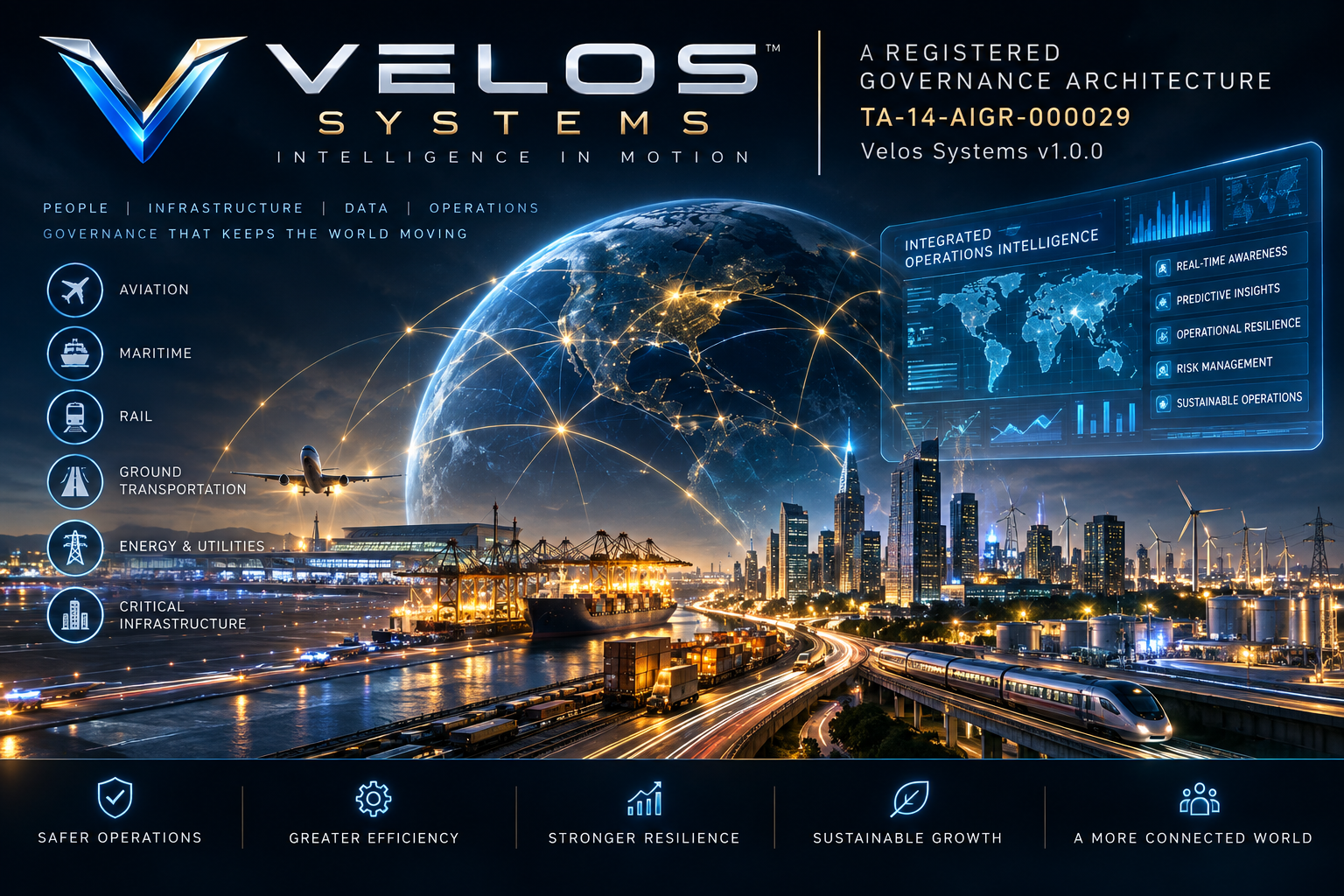
Velos Systems v1.0.0 brings governance directly to a consequential technical boundary. Its declared Layer-4 enforcement substrate places native evaluation at tc-ingress, before traffic reaches the destination application socket. That makes Velos especially interesting for governed execution: the architecture is designed around making a real progression decision at the point where consequence can still be stopped. TA-14-AIGR-000029 preserves this architecture as an attributable public governance identity and gives visitors a clear way to understand how Velos approaches deterministic enforcement.
02 · THE CONSEQUENCE PATH
A frozen TA-14 state is presented across the declared interface.
Velos evaluates the received state using its own declared native invariants.
The declared execution cut is the tc_ingress decision point before the destination application socket.
Declared progression is TC_ACT_OK; declared refusal uses TC_ACT_SHOT / channel teardown behavior within the frozen route.
Kernel event and Governance Refusal Receipt must bind the challenged action to the refusal chronology.
This is where Velos becomes especially compelling. The architecture is not centered on merely noticing a prohibited condition after the fact. Its declared design is aimed at acting before the consequence crosses the execution boundary. A frozen state reaches Velos, native logic evaluates it, and the route either progresses or is interdicted. The accompanying kernel event and Governance Refusal Receipt create a powerful evidence concept: prevention can be connected to the exact challenged action and its chronology.
03 · OPERATE THE GOVERNANCE
Velos Systems v1.0.0 is the registered independent governance identity. Registration preserves identity and provenance; it does not establish Technical Freeze, interoperability, execution authority, safety, certification, or a TA-14 finding.
04 · THE COMPLETE OPERATING PICTURE
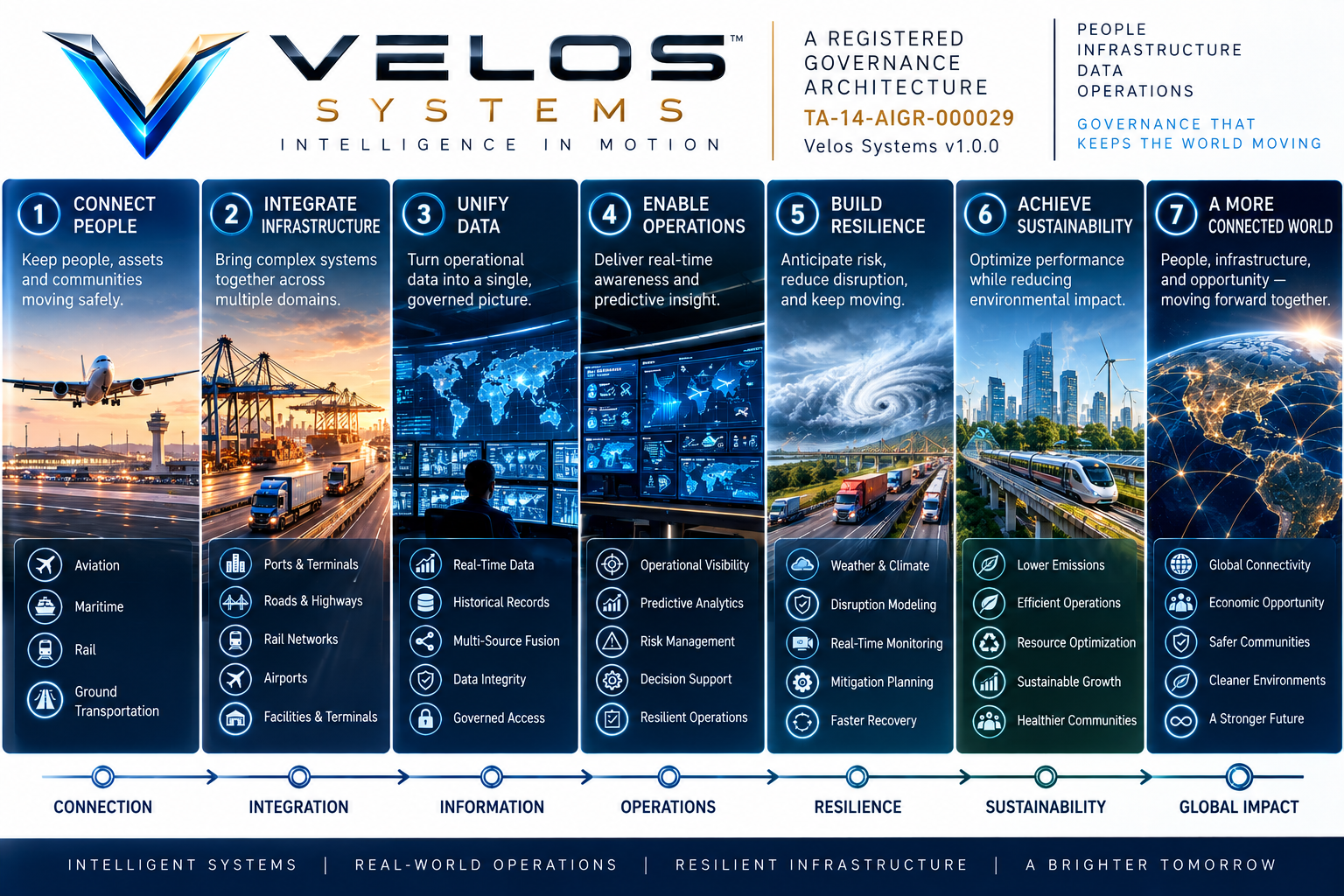
Velos presents an ambitious operating vision for governed infrastructure. The larger picture connects people, infrastructure, data, and operations around a deterministic enforcement layer. For TA-14, that creates an exciting examination opportunity: take that broad architectural capability and pressure-test one precise consequence path deeply enough to show what happens at the execution boundary. The result is a public showroom where visitors can see both the scale of the Velos vision and the technical mechanism underneath it.
05 · WHAT THE SUCCESSOR R1 IS ACTUALLY TRYING TO ESTABLISH
The frozen state must cross the exact declared carrier without semantic substitution or undeclared authority creation.
Velos must evaluate the state using declared native invariants—not a TA-14-authored replacement engine.
When refusal is required, the challenged consequence must not cross the declared execution boundary.
The event and receipt must correlate to the challenged action, native determination, execution cut, and chronology.
The admitted evidence must distinguish prevention from detection, alerting, logging, or retrospective explanation.
The successor R1 gives Velos a demanding and technically meaningful examination target. Five burdens make the proposition concrete: interface correspondence, native evaluation, pre-execution refusal, evidence correspondence, and active enforcement. Together they turn a high-level governance idea into something that can be challenged at an actual execution boundary. If the frozen evidence supports those burdens, the result will show exactly what Velos established within the examined route—without needing to inflate the claim.
06 · PRESENT STATE
The proposition, native semantics, route, consequence boundary, evidence channels, and failure logic have advanced beyond broad architectural scoping. Exact identity sealing and final participant acceptance remain.
No R1 examination execution is authorized until final immutable identities and freeze acceptance are preserved.
07 · CLAIM CEILING
The declared <4.0 µs latency profile is excluded from R1. Any captured latency remains participant telemetry unless separately frozen and admitted under an appropriate measurement proposition.