TEACHING IMAGE 01 / 08
One City. Thousands of Assets. One Governed Execution Boundary.
The city as a governed system
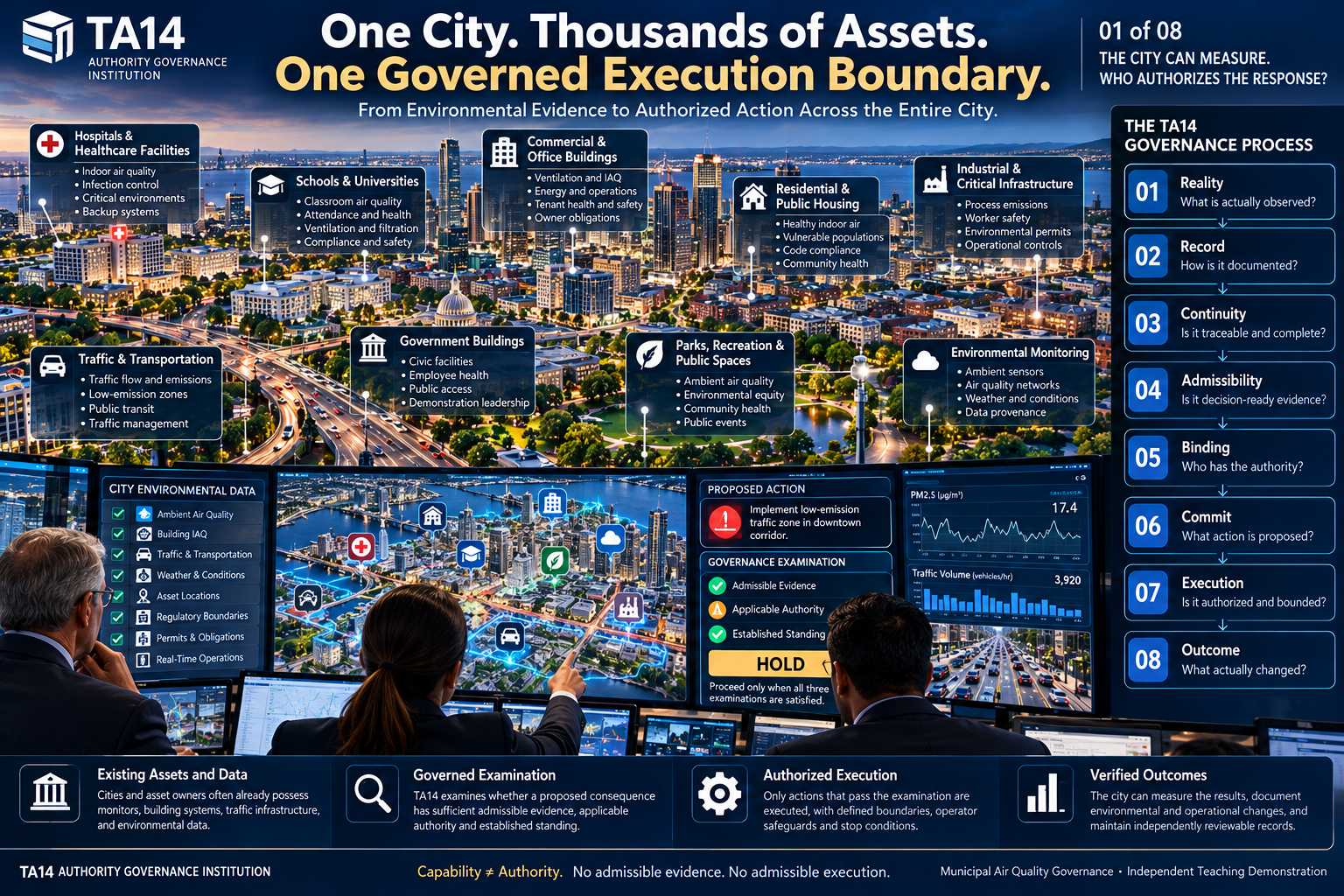
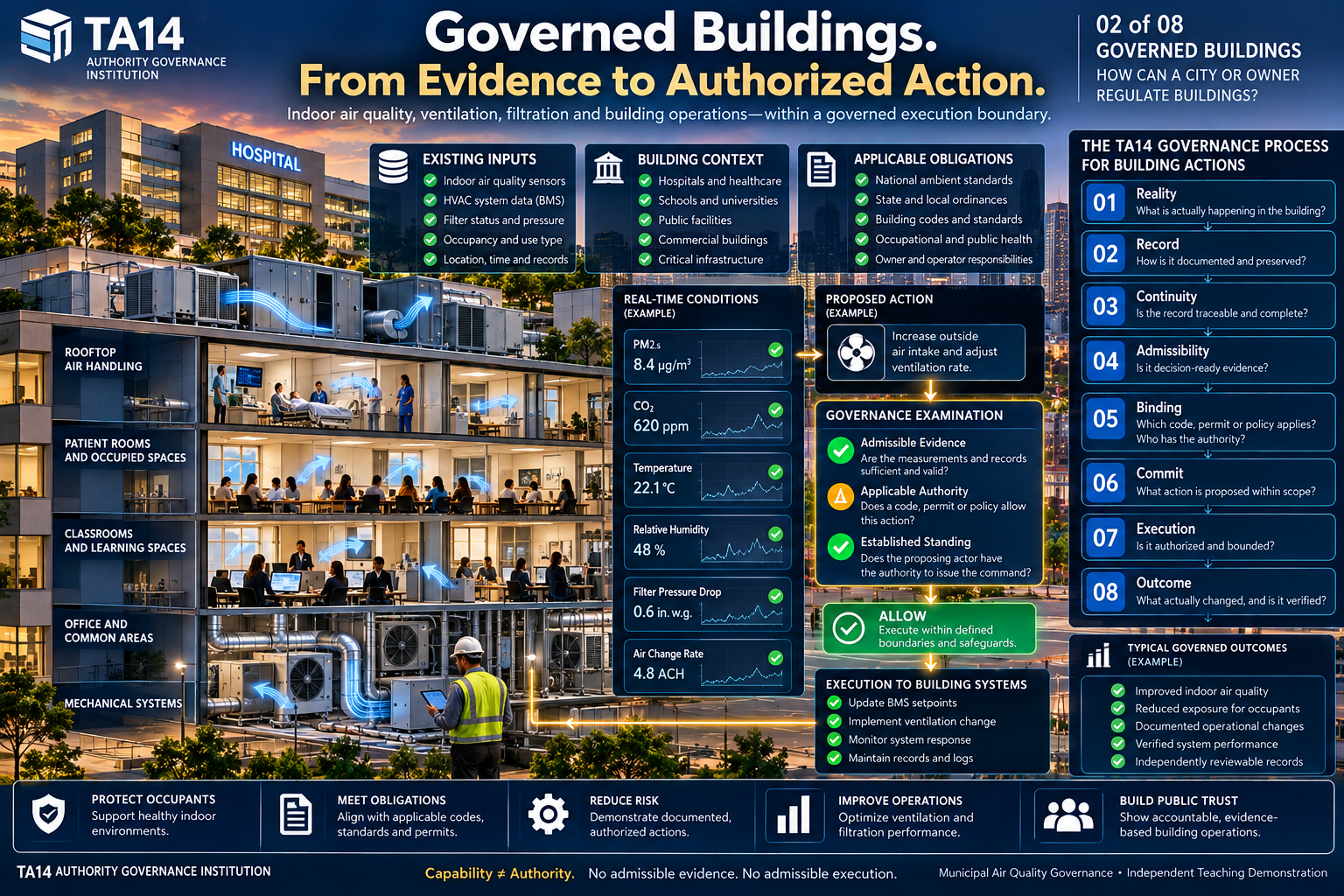
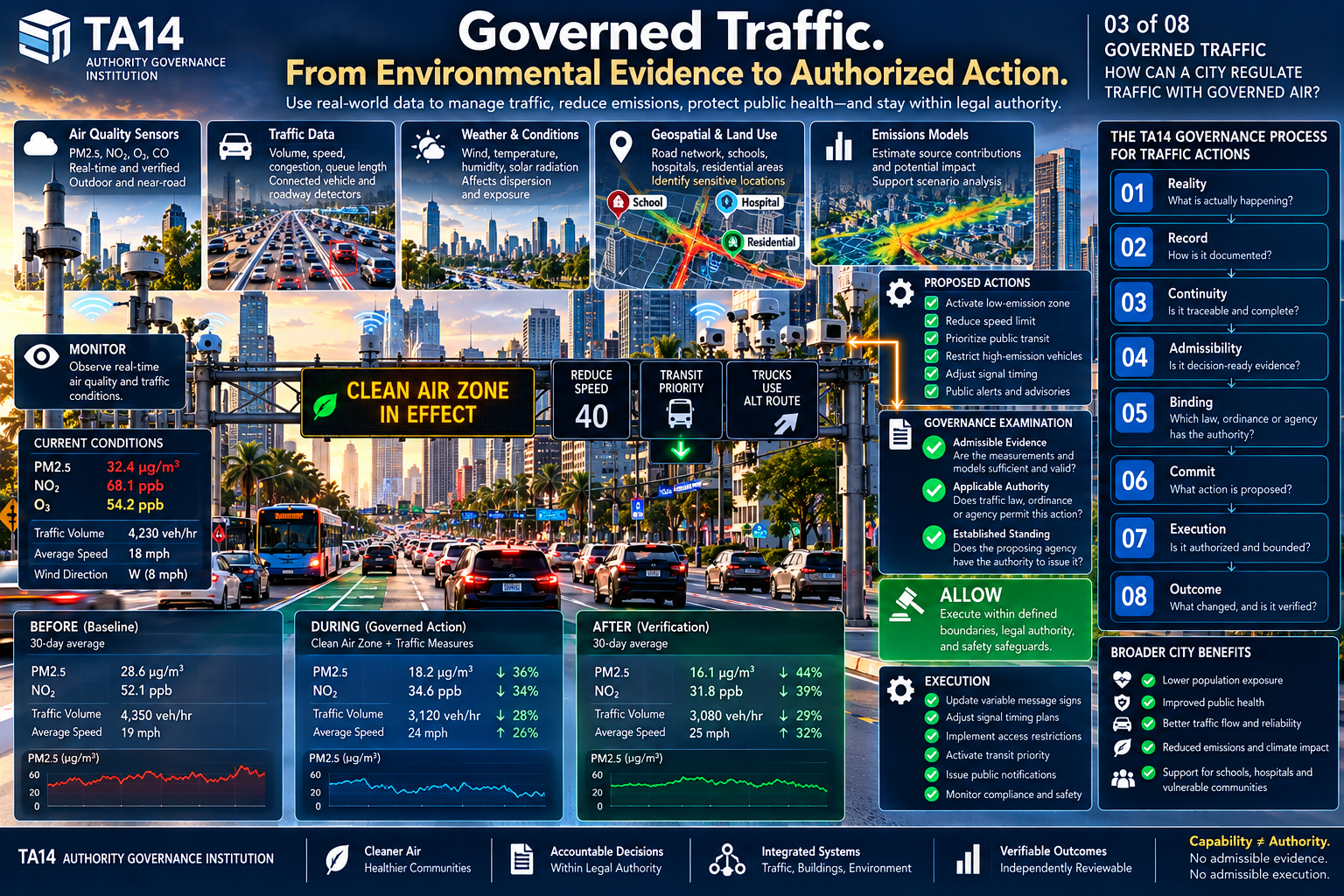
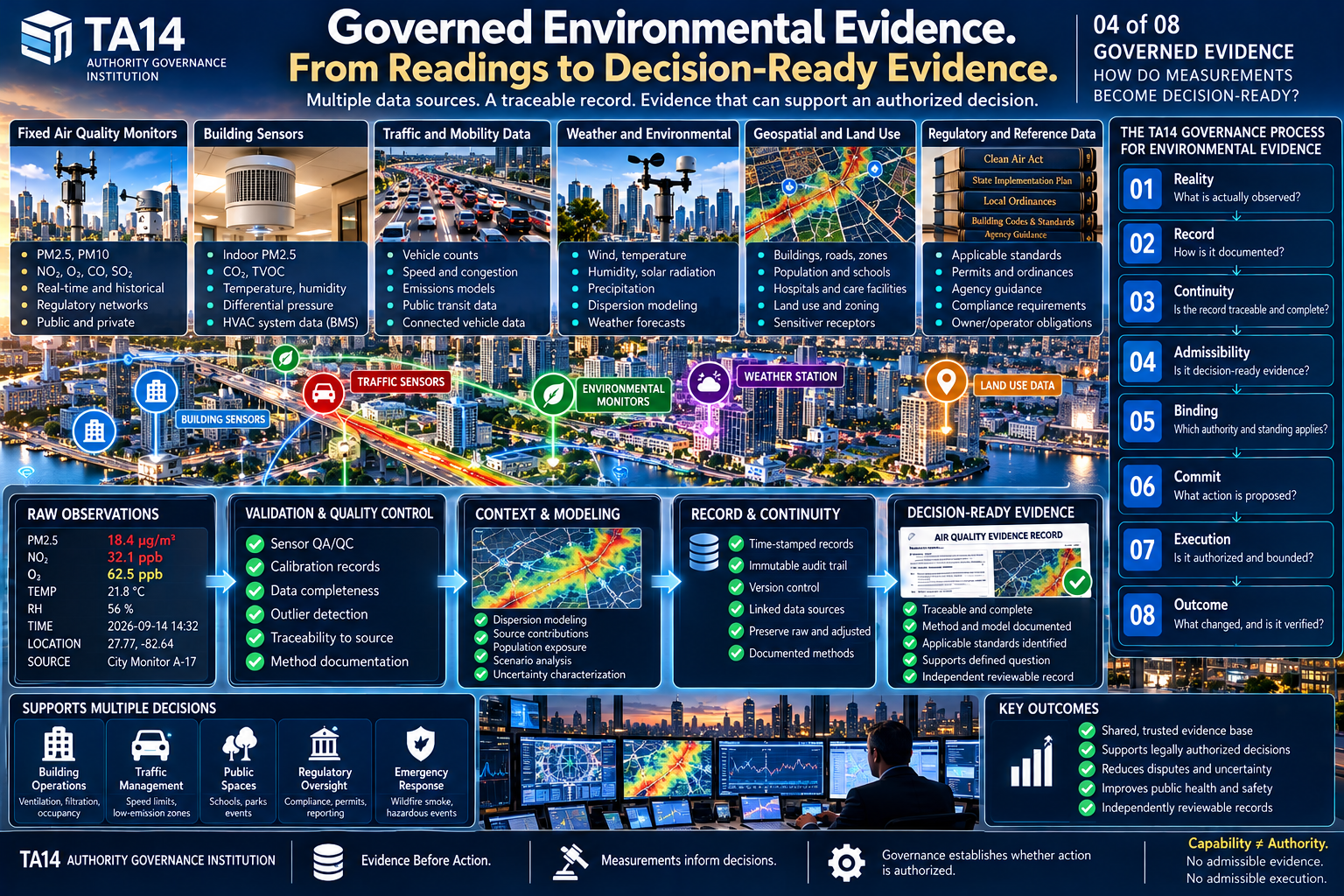
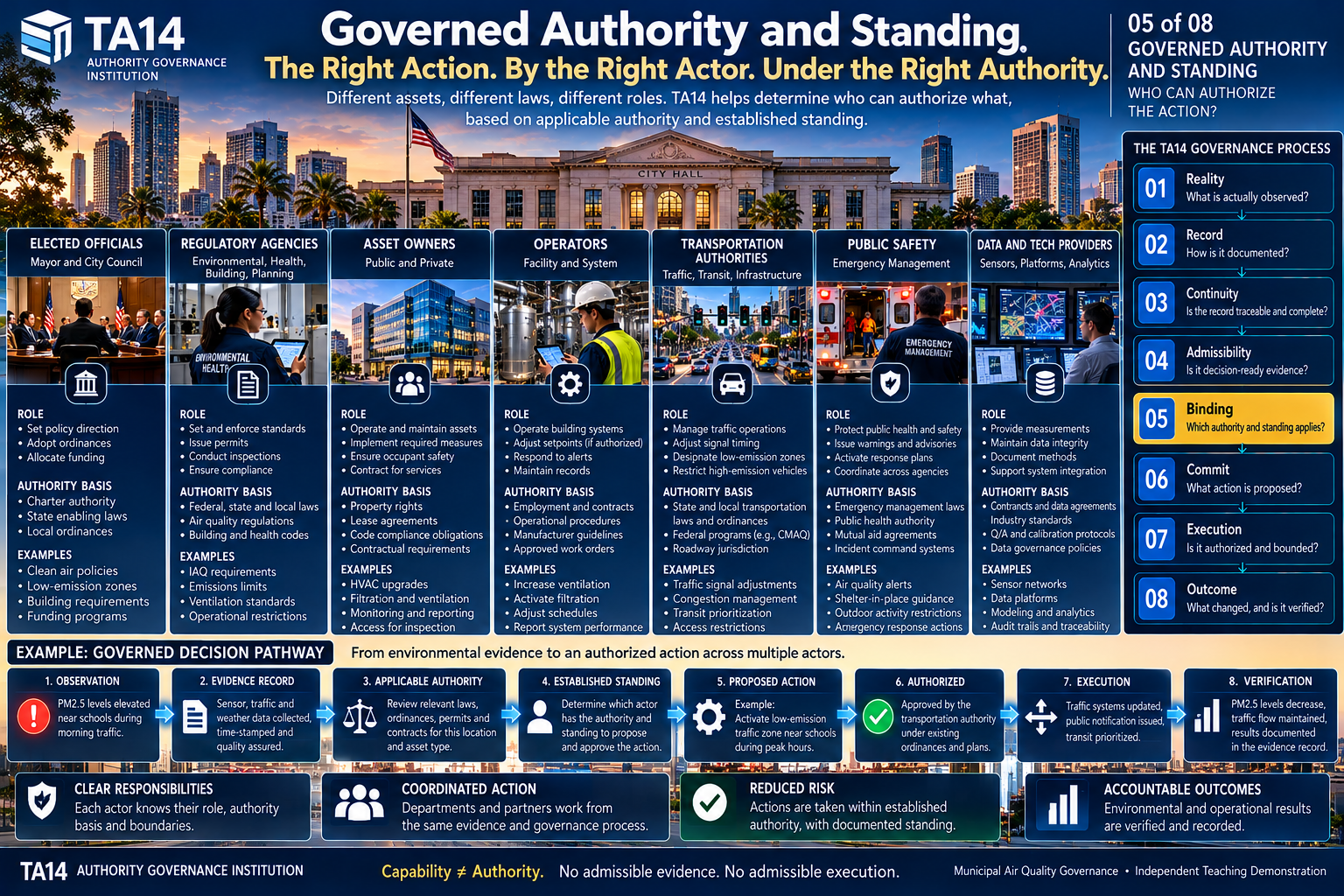
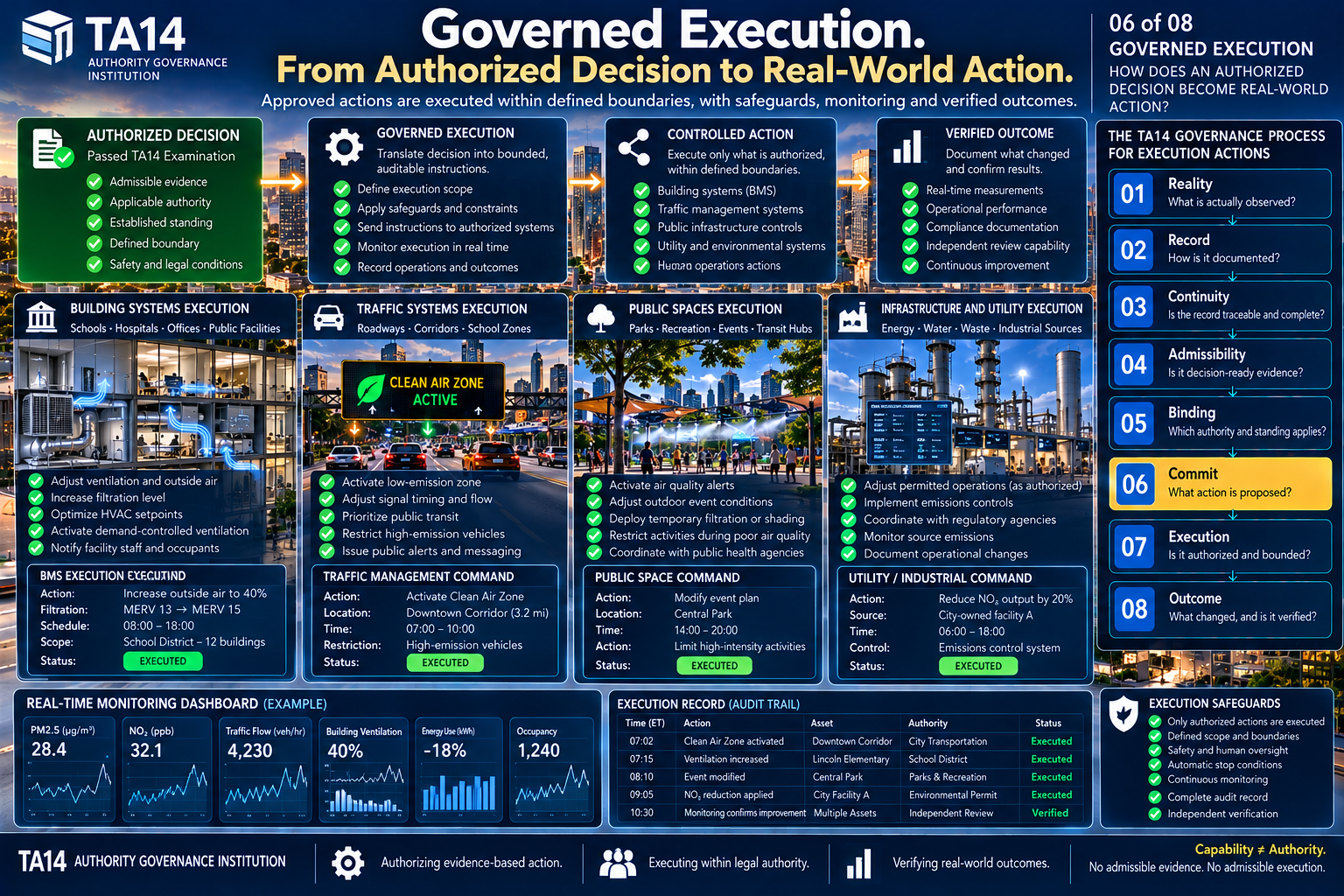
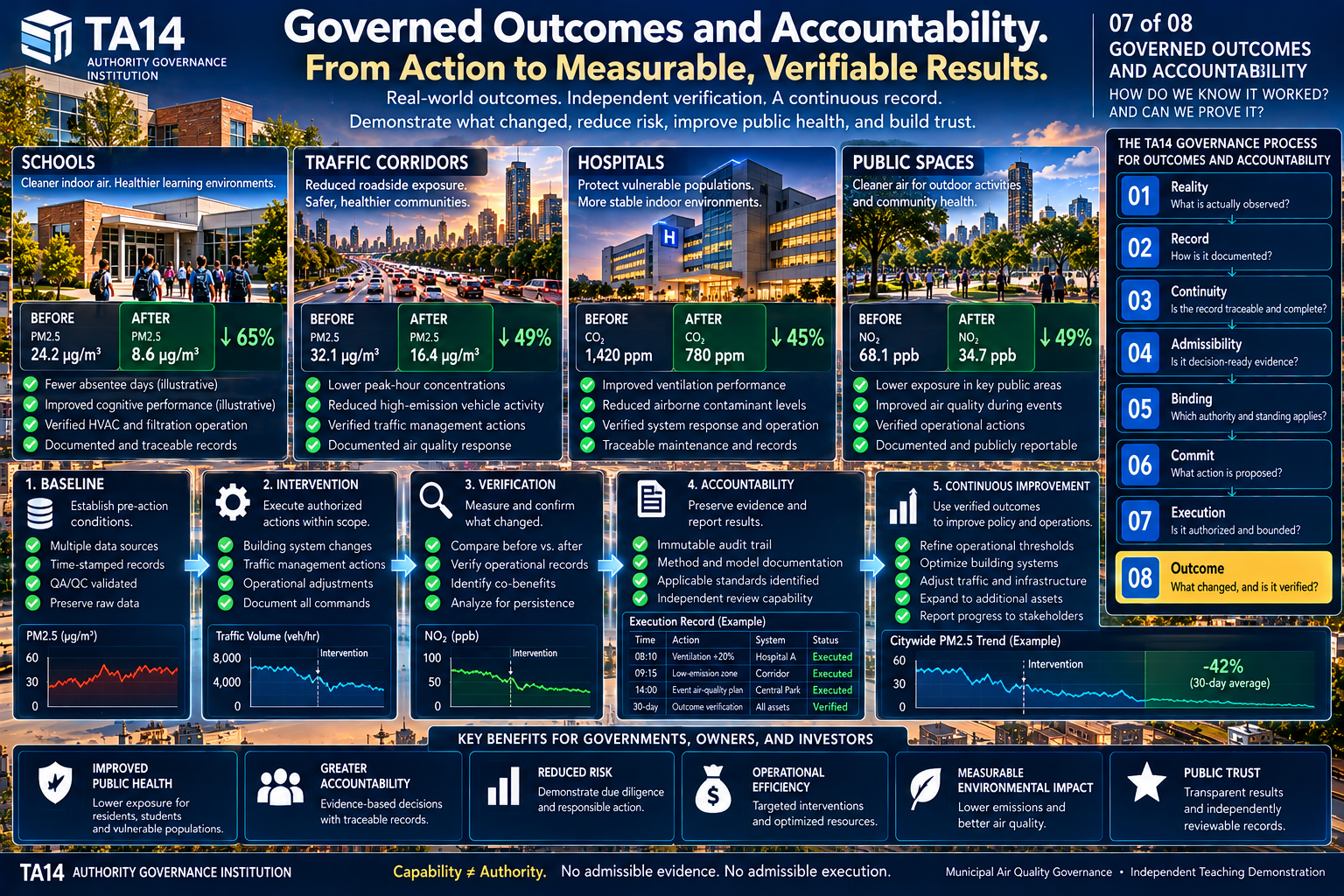
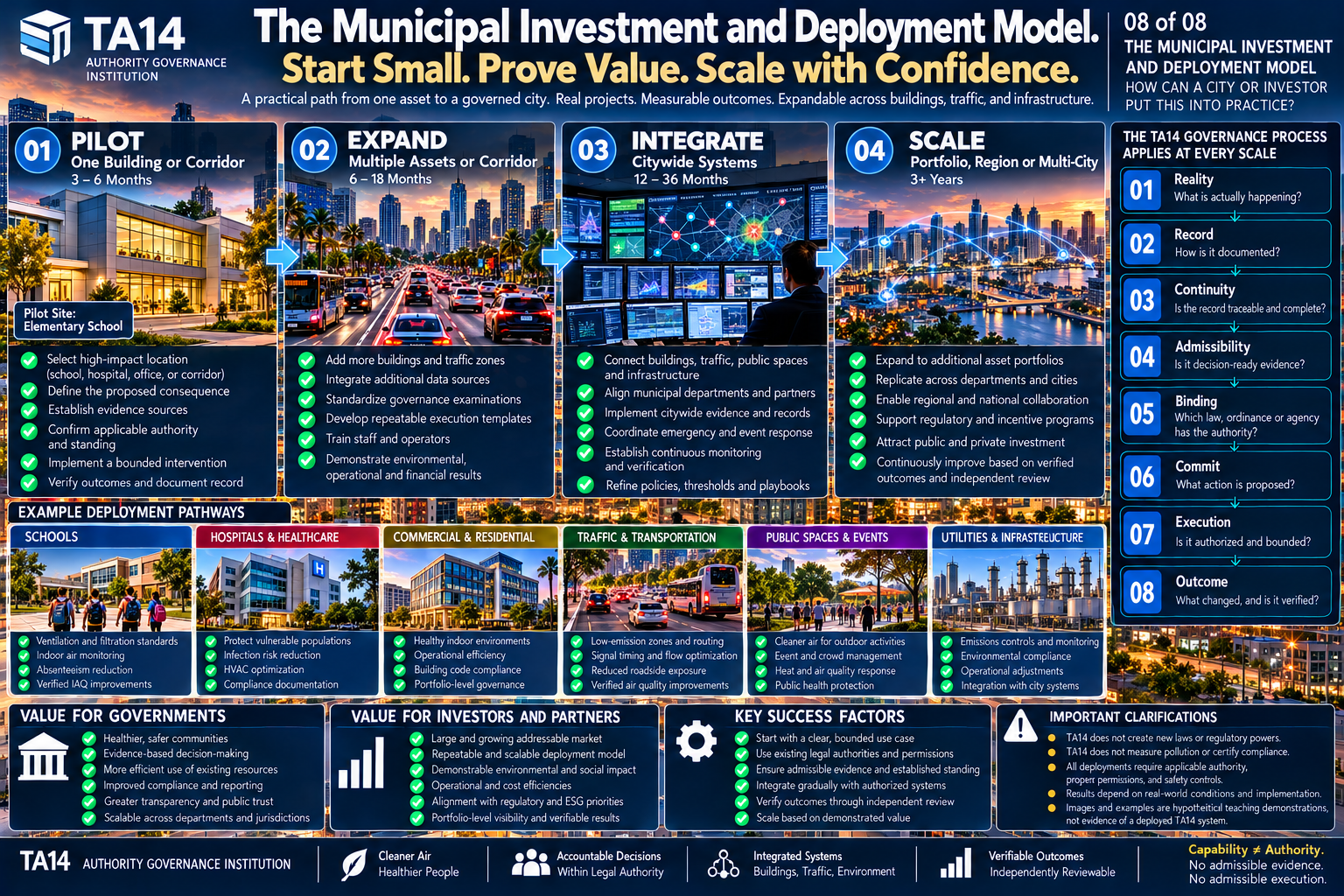
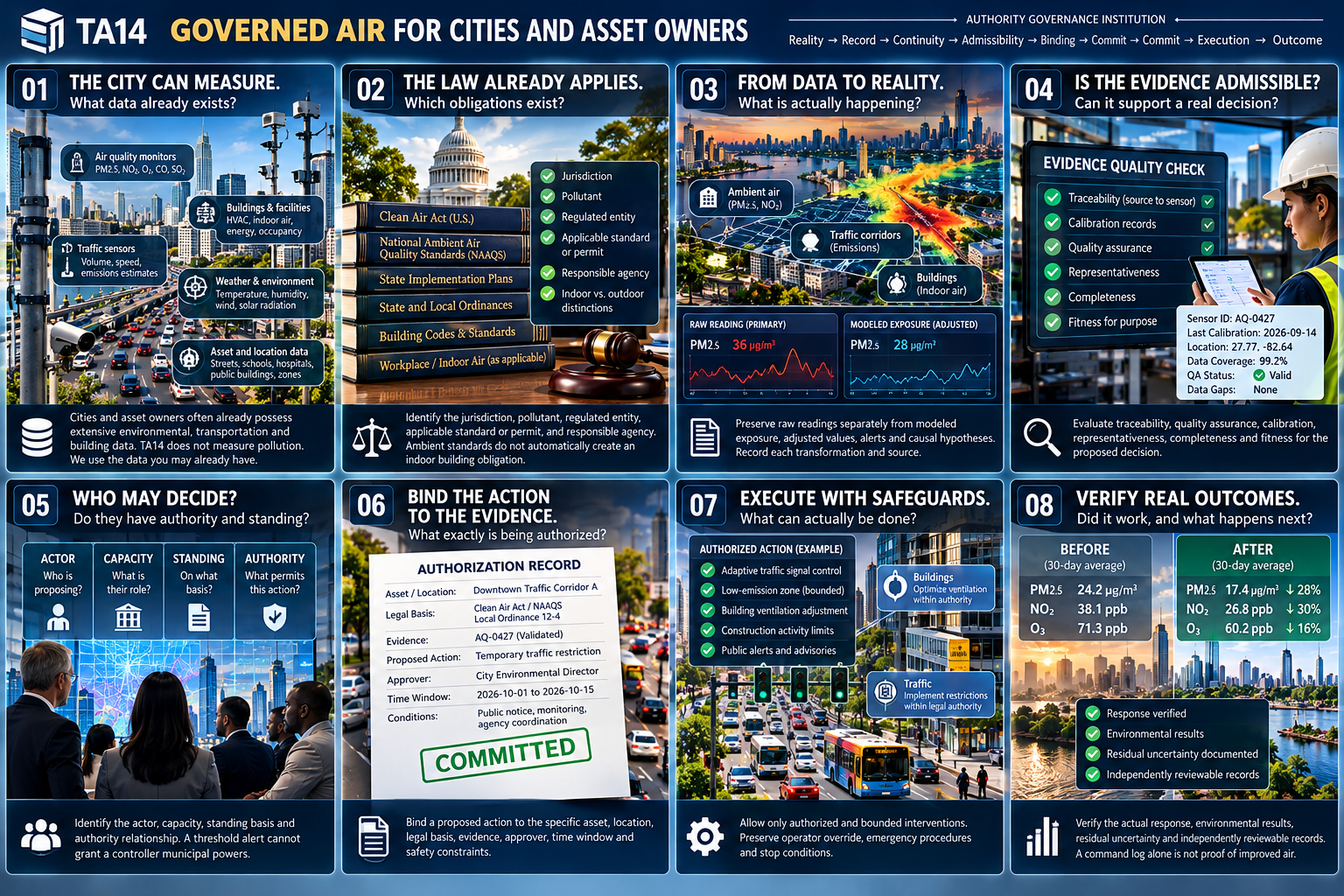
Begin with the city as an ecosystem of independently controlled assets. Hospitals, schools, offices, transportation corridors, utilities and public spaces all collect information, make decisions and affect people. The potential opportunity is not to place every asset under one unlimited controller. It is to apply a consistent examination at each consequence boundary. First identify exactly what is being proposed. For a school, perhaps increasing outdoor ventilation or replacing filtration. For a corridor, perhaps initiating an inspection or proposing a temporary traffic measure. Then ask whether the evidence is admissible for that particular action, which authority applies to the location and asset, and whether the actual decision maker has established standing. A municipal air-quality reading may be relevant to several actions but it does not confer permission to perform them. TA14 can support independent, bounded decisions across existing platforms without forcing every owner to purchase a single technology stack. The illustrated command center represents a teaching concept, not an operating municipal deployment. The point is scale with boundaries: shared evidence and accountability, local execution authority, and outcomes that can be independently examined.
WHAT YOU LEARNED
A city does not need one super-controller. It needs a consistent consequence examination while each owner and agency retains its own authority.
COMING UP · IMAGE 02
Next, step inside a real type of asset: a school or hospital. We will see how governed air can turn building measurements into appropriately authorized ventilation or filtration decisions.