What environmental facts would actually help a pulmonologist?
TA14 AUTHORITY GOVERNANCE INSTITUTION · CLINICAL EXAMINATION INVITATION · DR. POOJA CHORADIA
THE LUNG HAS
A MEDICAL RECORD.
WHAT ABOUT THE AIR?
PAIR™ preserves a person-centered atmospheric chronology. ERI interprets what the environmental record can and cannot support. The clinician retains independent medical competence and authority.
↓ DOWNLOAD TECHNICAL EXAMINATION PDFPAIR™ × ERI · Clinical Examination · v2 · Public technical reference
PAIR™ PRESERVES → ERI INTERPRETS → CLINICIAN PRACTICES MEDICINE
THE EXAMINATION QUESTION
Can the environmental record become more clinically useful without pretending to become medicine?
The burden is to preserve environmental reality strongly enough for later reliance while keeping environmental interpretation, individual medical causation, diagnosis, treatment and clinical authority separate.
01 · CLINICAL TEACHING VISUAL
THE MISSING LONGITUDINAL LAYER
The person moves. The atmosphere changes. The environmental record should not disappear at the doorway.
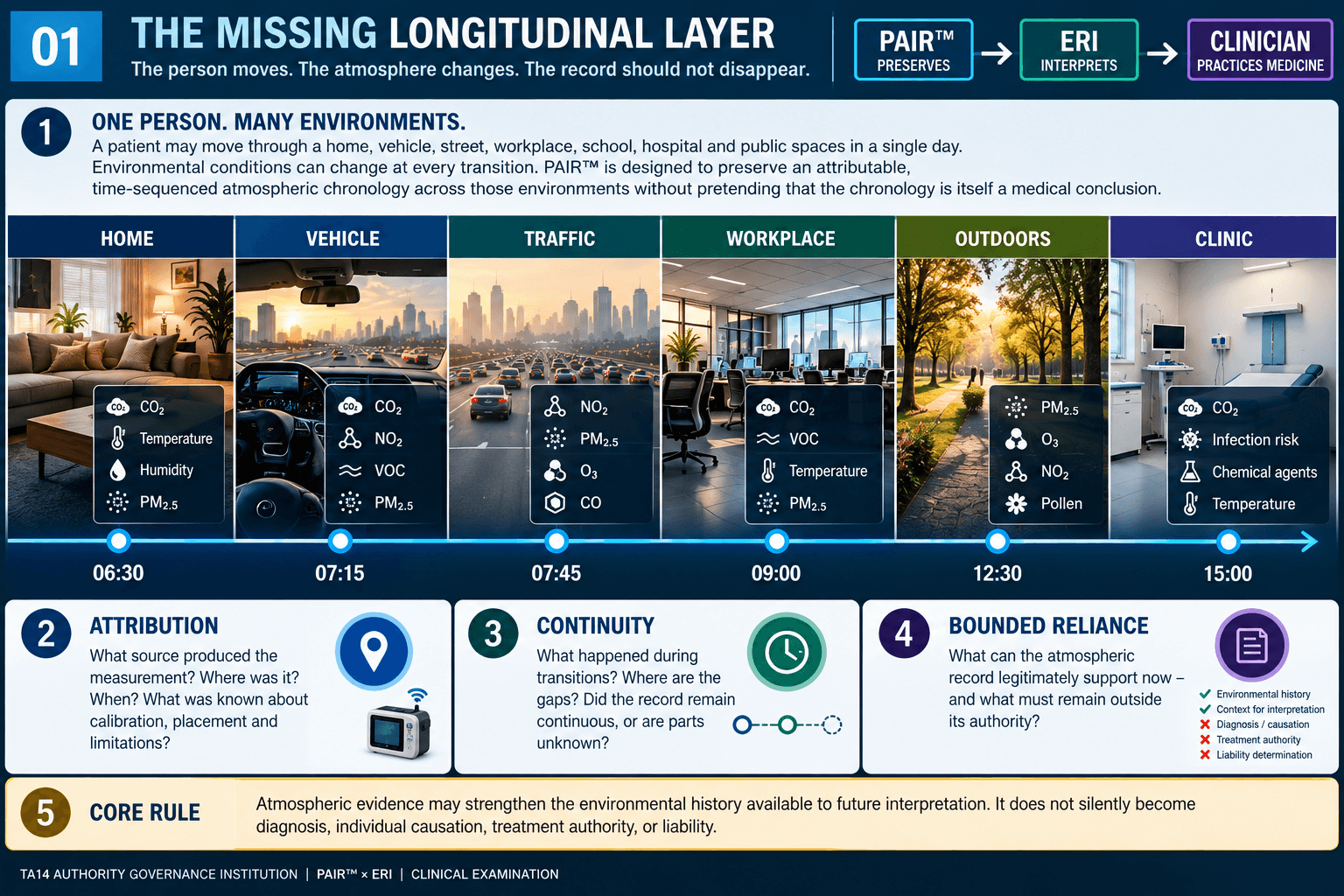
02 · CLINICAL TEACHING VISUAL
PAIR PRESERVES. ERI INTERPRETS. CLINICIAN PRACTICES MEDICINE.
Three layers. Three different responsibilities. No borrowed authority.
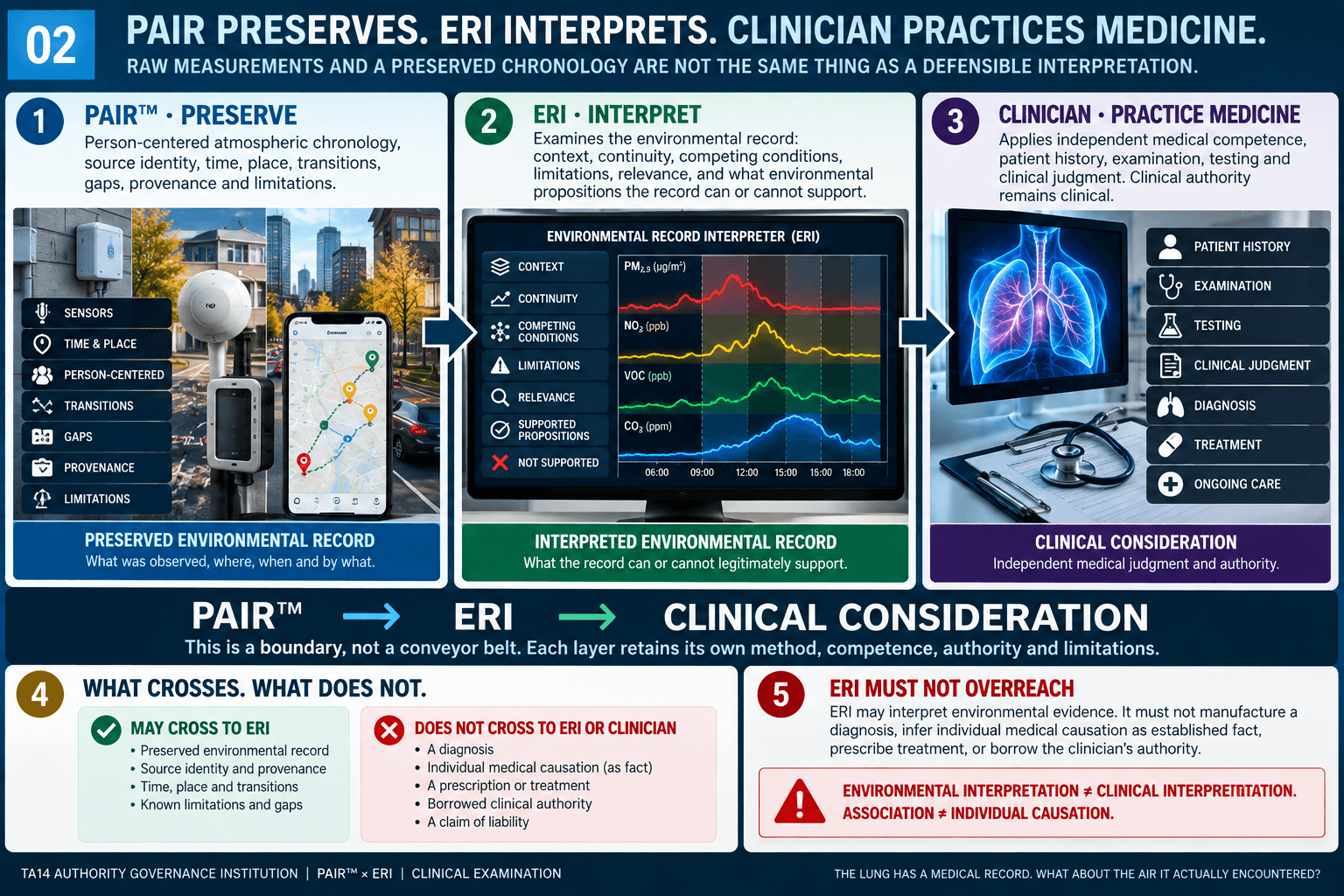
03 · CLINICAL TEACHING VISUAL
WHAT MUST SURVIVE THE JOURNEY
Eight preservation requirements before anyone asks medicine to rely on the environmental record.
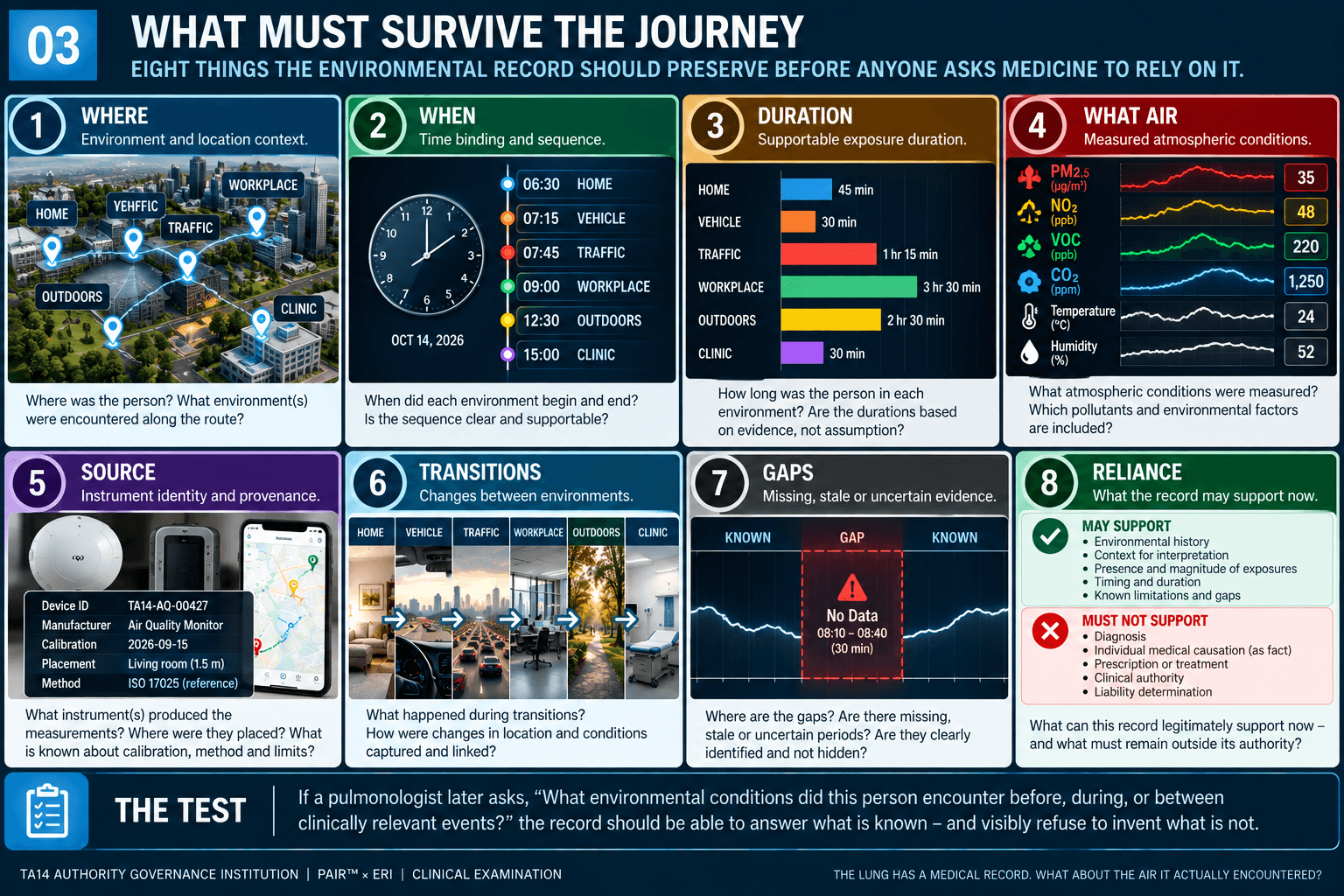
04 · CLINICAL TEACHING VISUAL
WORKED EXPOSURE CHRONOLOGY
One day. Multiple environments. A visible gap instead of invented continuity.
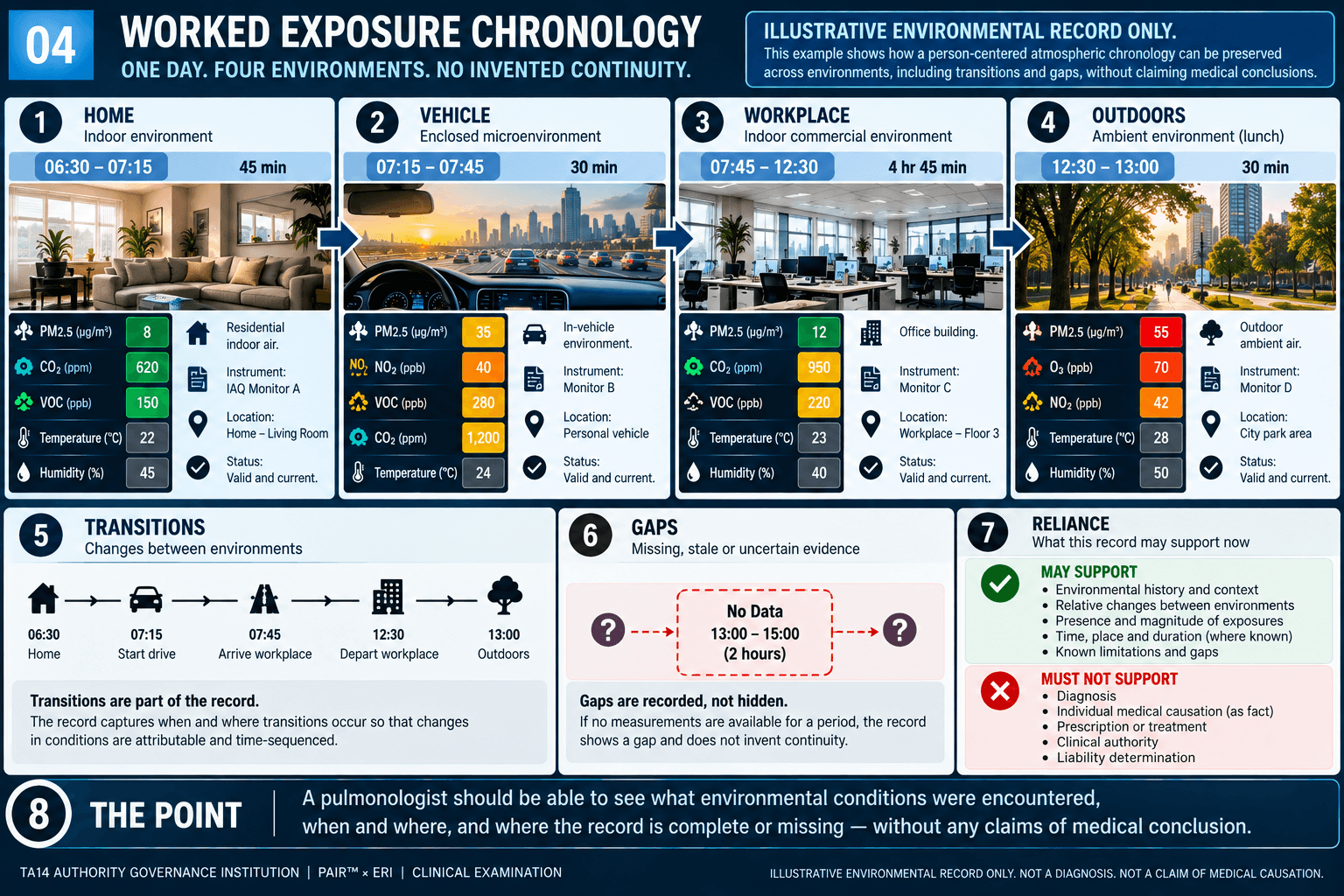
05 · CLINICAL TEACHING VISUAL
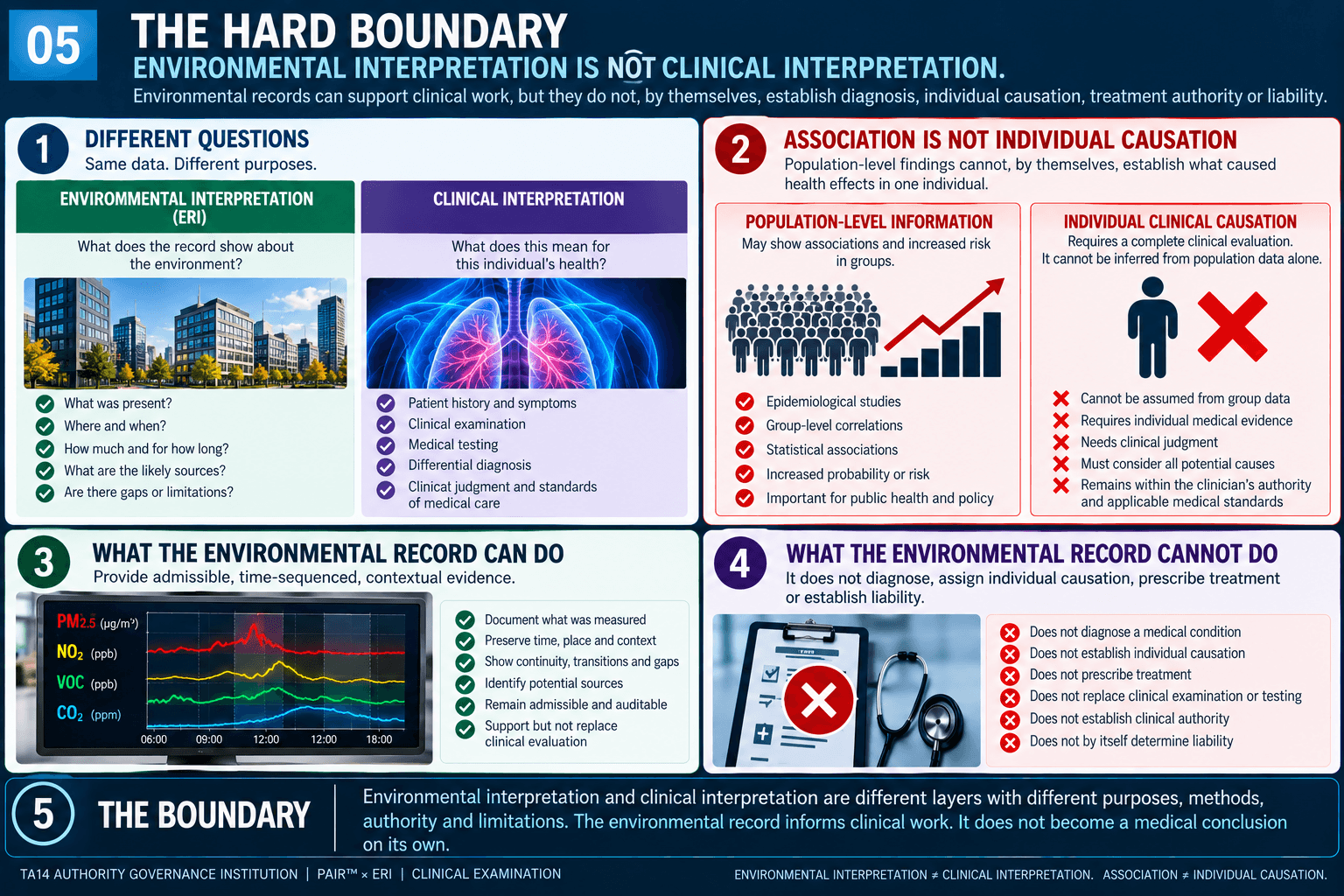
THE HARD BOUNDARY
Environmental interpretation is not clinical interpretation. Association is not individual causation.
06 · CLINICAL TEACHING VISUAL
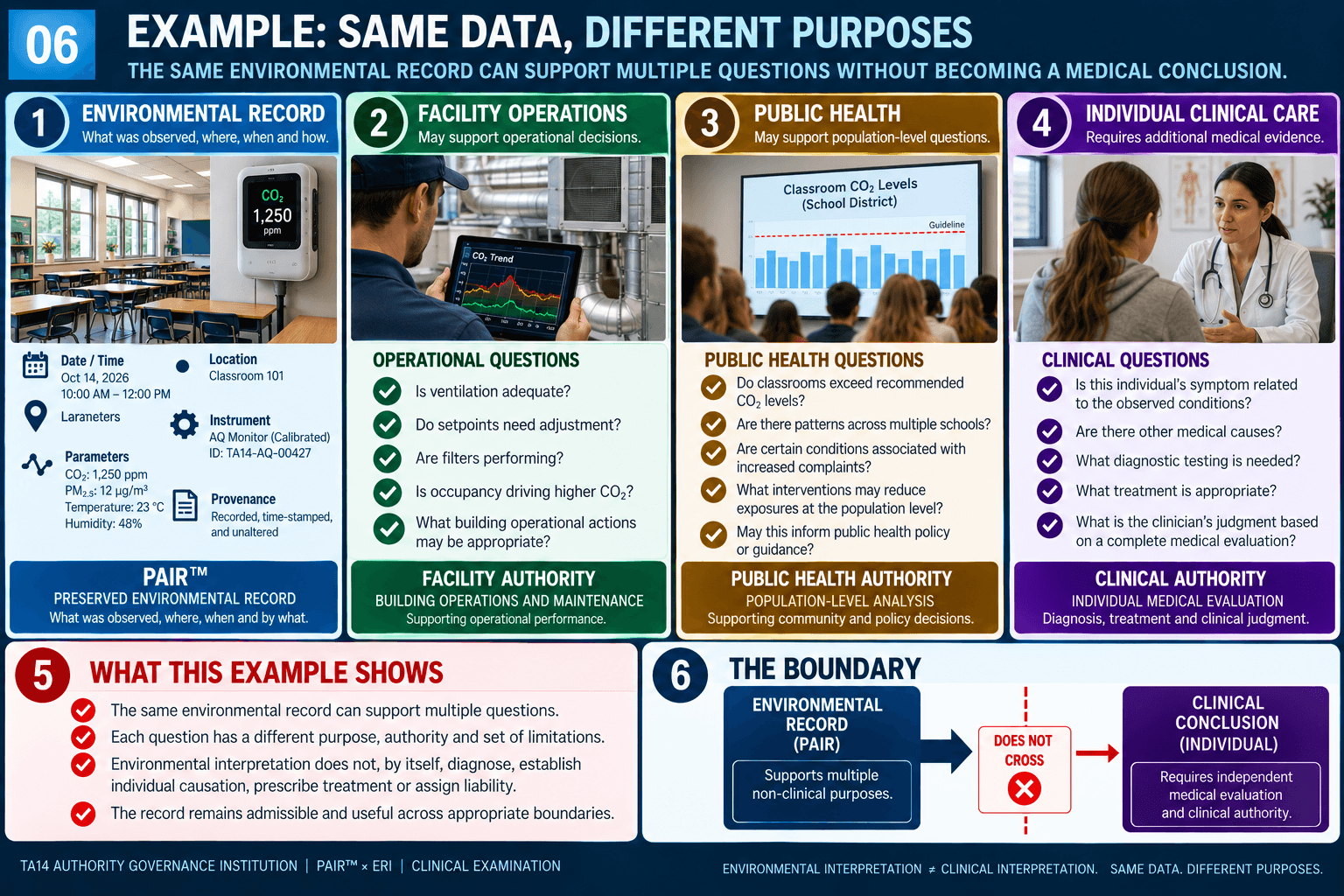
SAME DATA. DIFFERENT PURPOSES.
One environmental record can support different questions without acquiring somebody else’s authority.
07 · CLINICAL TEACHING VISUAL
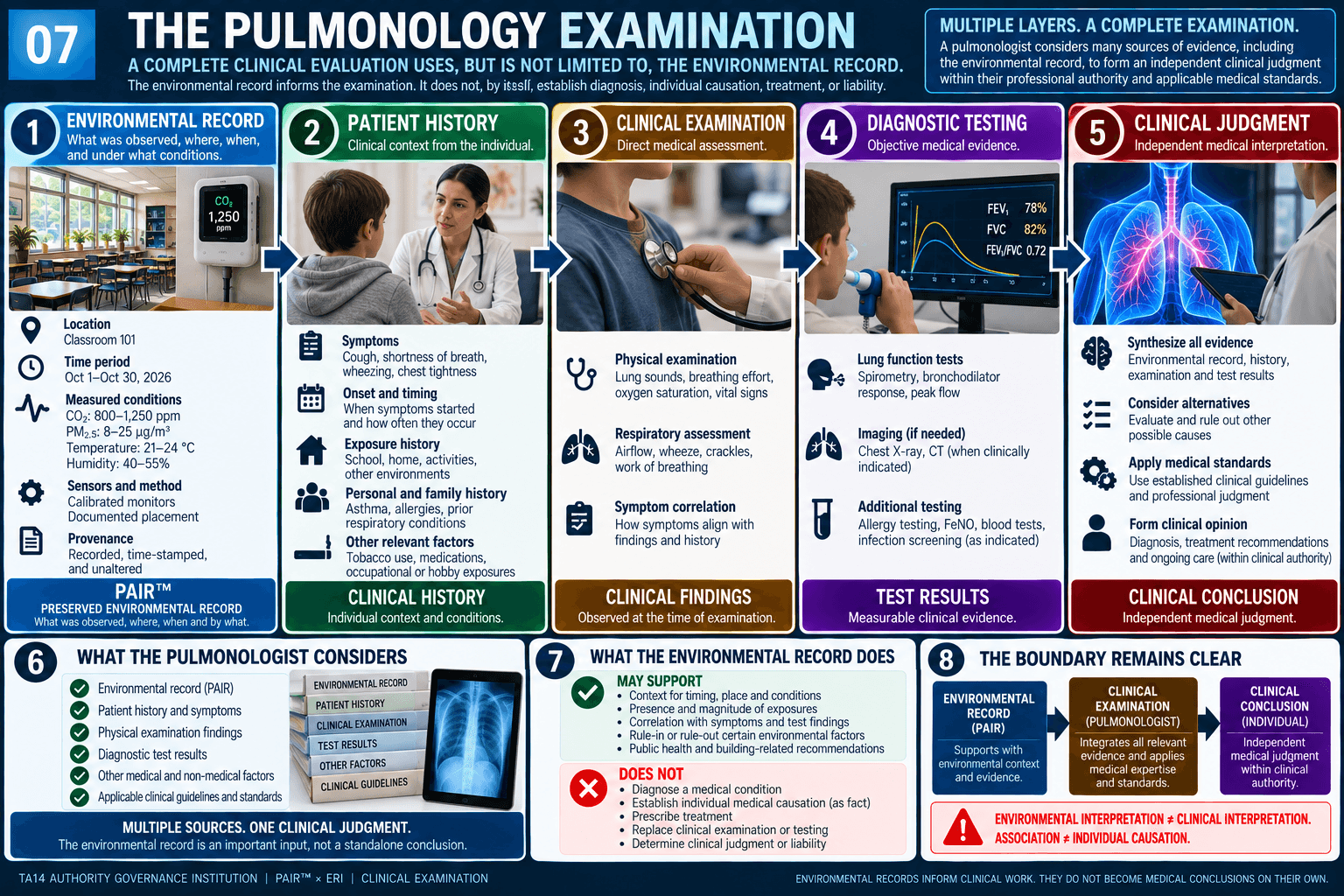
THE PULMONOLOGY EXAMINATION
The environmental record becomes one input into a much larger clinical evidentiary process.
08 · CLINICAL TEACHING VISUAL
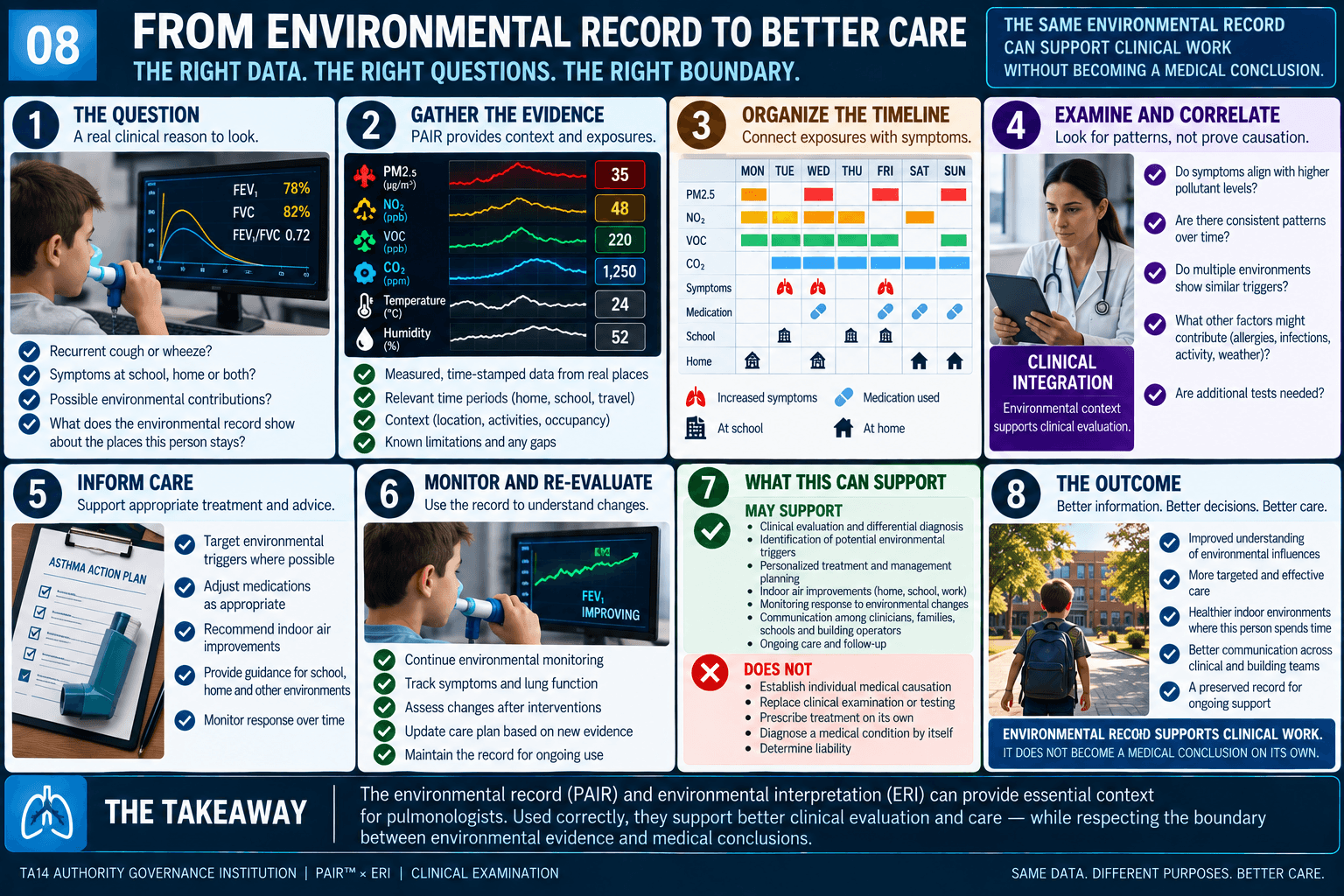
FROM ENVIRONMENTAL RECORD TO BETTER CARE
A proposed seam for examination: better environmental context without turning the record into a medical conclusion.
DIRECT INVITATION TO EXAMINE
DR. CHORADIA,
TELL US WHERE THIS BREAKS.
We are not requesting endorsement. We are asking whether this boundary is clinically defensible, what a pulmonologist would actually need preserved, where ERI must stop, and what would make a person-centered atmospheric chronology useful—or dangerous—in real clinical reasoning.
Which provenance and continuity failures would make the record unusable?
Where could an ERI interpretation bias or contaminate clinical judgment?
What environmental context is missing from this proposed chronology?
How should uncertainty and data gaps be presented to a clinician?
Which apparent exposure patterns are most likely to invite causal overreach?
What must remain exclusively inside the medical record and clinical process?
What would you change before asking clinicians to examine PAIR in practice?