WHAT DOES PROOF
ACTUALLY AUTHORIZE?
A system can be technically correct. The proof can be real. The connection can work. None of those facts, standing alone, establish permission for a proposed consequence to become physical reality.
Autonomous HVAC optimization.
An optimization layer has a verified model, current telemetry, a demonstrated energy-saving sequence and a successful pilot. It proposes changing discharge-air temperature and static-pressure targets across an occupied building. The question is not whether the technology is impressive. The question is whether this specific consequence has earned execution now.
What exactly is being claimed?
Installed, connected, interoperable, accurate, effective, safe, scalable and authorized are different propositions. Freeze the proposition before examining the proof.

Freeze the proposition before evaluating the proof. Installed, connected, accurate, effective, safe, scalable and authorized are different claims. A claim begins the examination; it is not yet proof, permission, or consequence.
Proof of what?
A pilot, commissioning record, sensor observation, model output, operator verification or test result can support a proposition. Evidence has scope; it does not become universal permission.
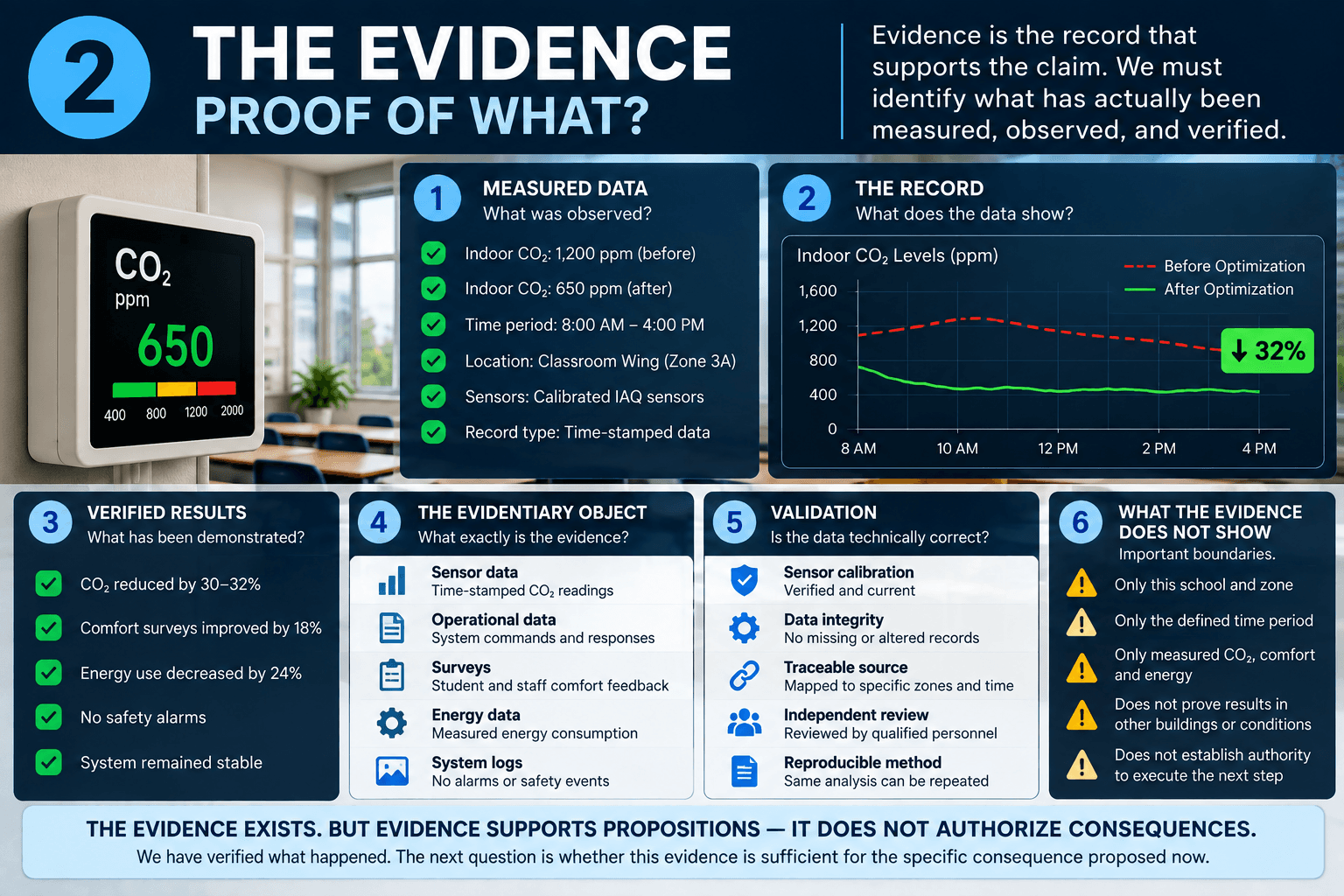
Ask what the evidence actually establishes. Measurements, records, tests and verified observations may support a proposition, but evidence has scope. Preserve what was measured, how it was established, and what the record does not prove.
Where does the proof stop?
Name the asset, operating state, population, time window, conditions and consequence actually supported. Do not let a bounded result silently expand.
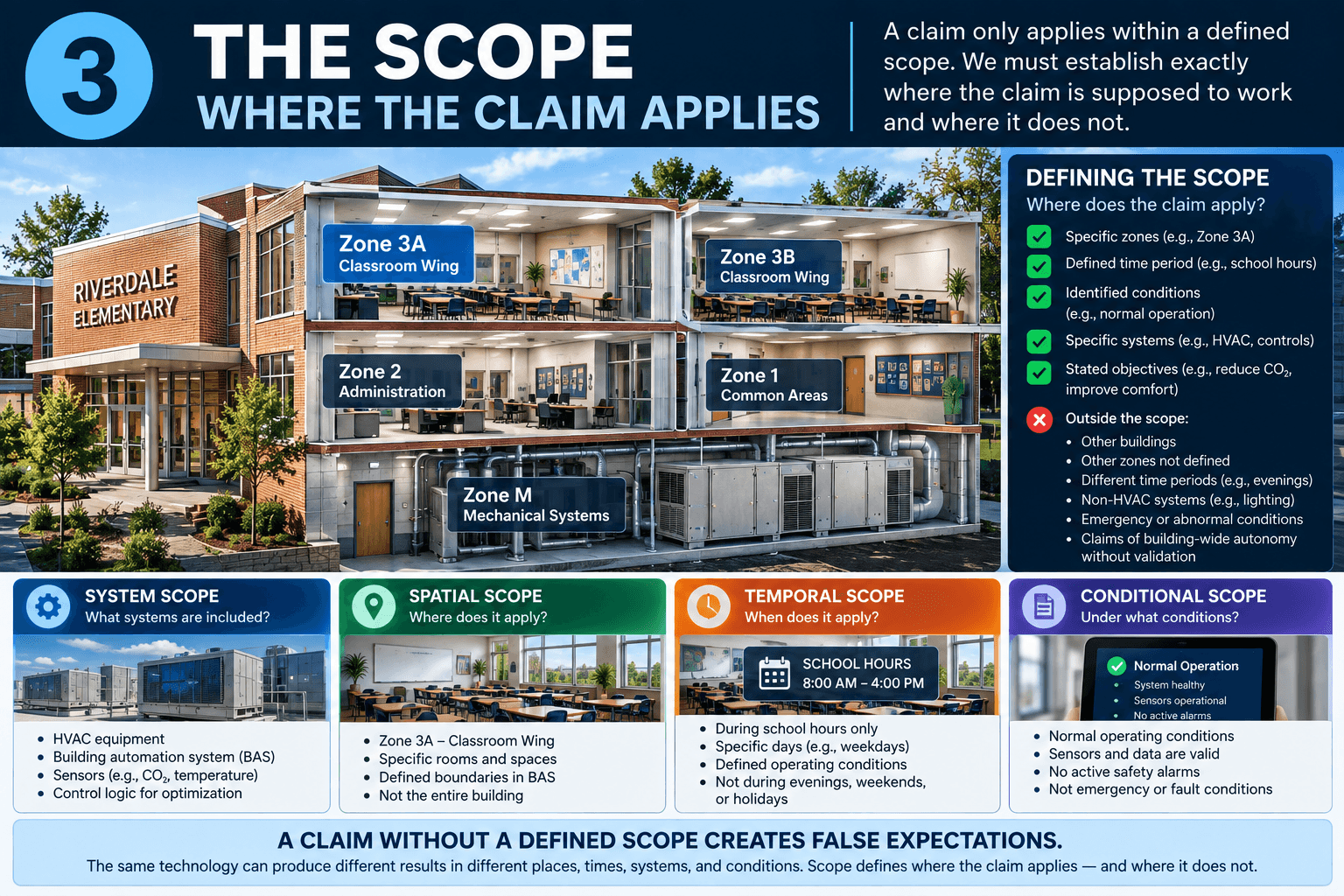
Define where the proof stops. Identify the asset, location, operating state, time window, conditions and consequence actually supported. A bounded result must not silently become a universal claim.
Does the record still represent reality?
Verified once does not mean established now. Conditions change. Continuity must survive between the record and the moment of proposed execution.
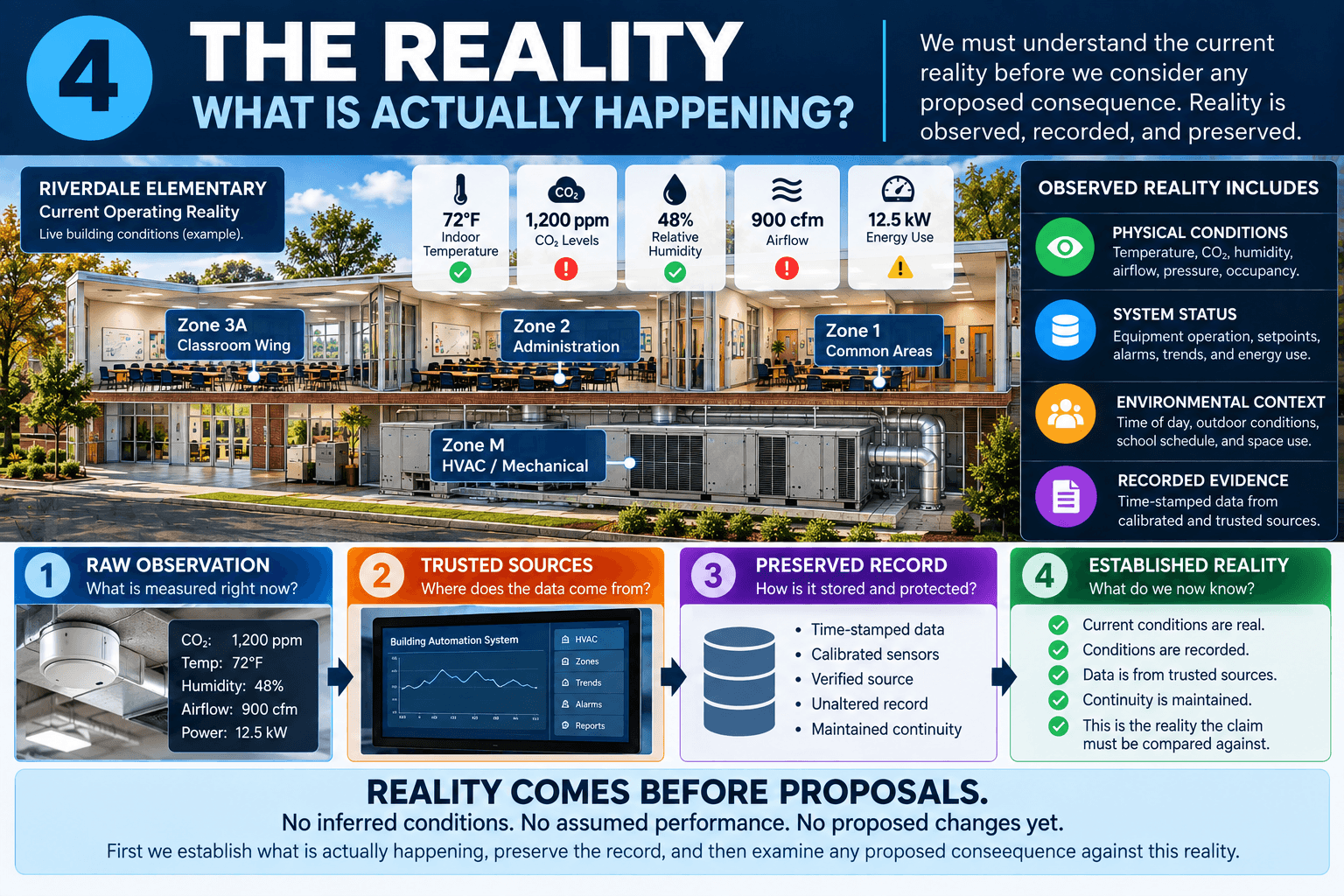
Return to physical reality. Verified once does not mean established now. Conditions change, sensors drift, overrides occur and equipment states move. Current consequence requires sufficient continuity between the record and reality now.
The crossing is not the permission.
Identity, information, recommendations, authority context and validly derived authority may cross systems. The crossing alone does not establish permission for this consequence.
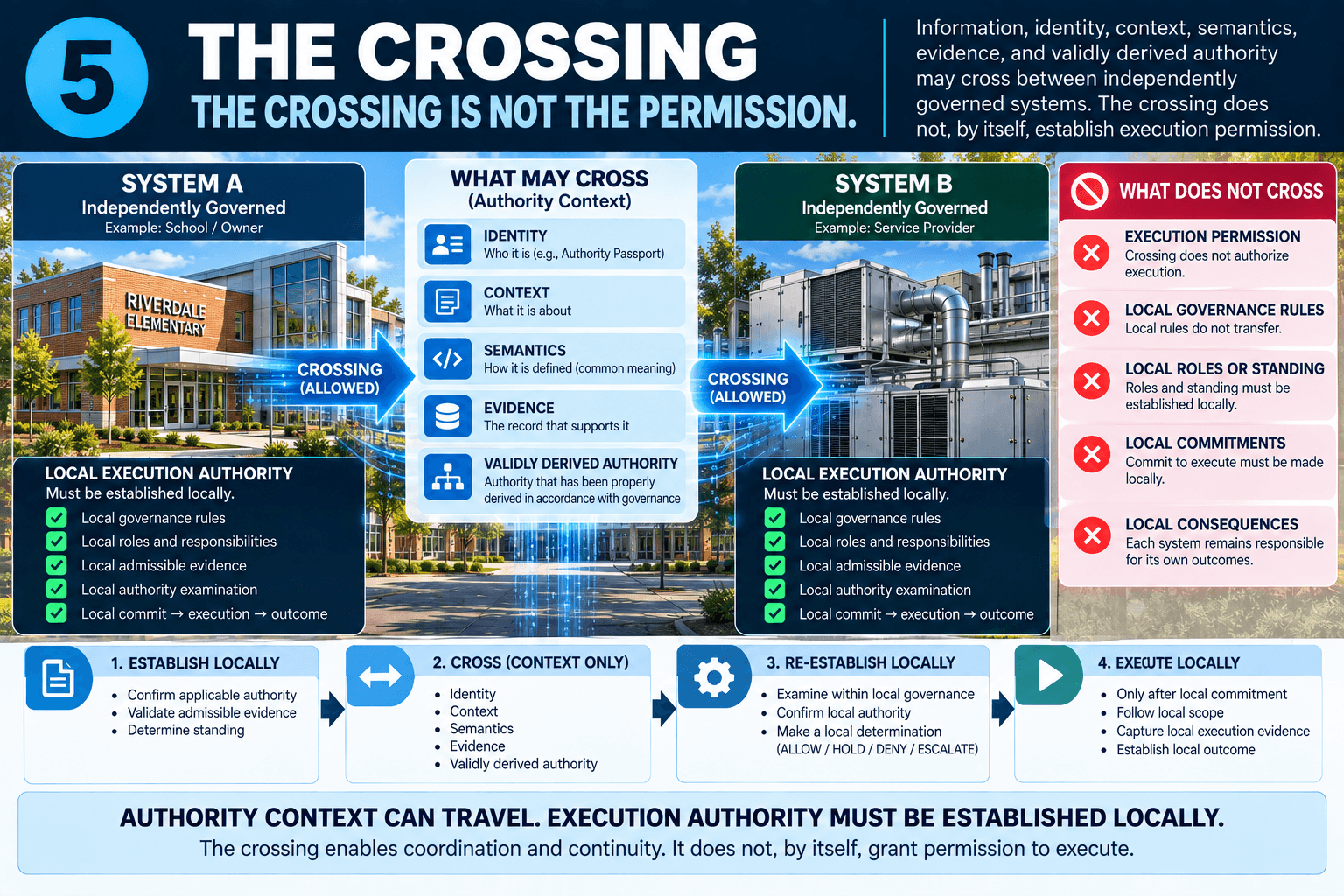
The crossing is not the permission. Identity, context, semantics, evidence and validly derived authority may cross independently governed systems. The receiving execution boundary still has to establish whether this specific consequence is permitted.
Locally established ≠ locally originated.
Authority may originate elsewhere and derived authority may traverse multiple entities. At execution, establish that the authority reaching the boundary is current, applicable, sufficient and in scope.
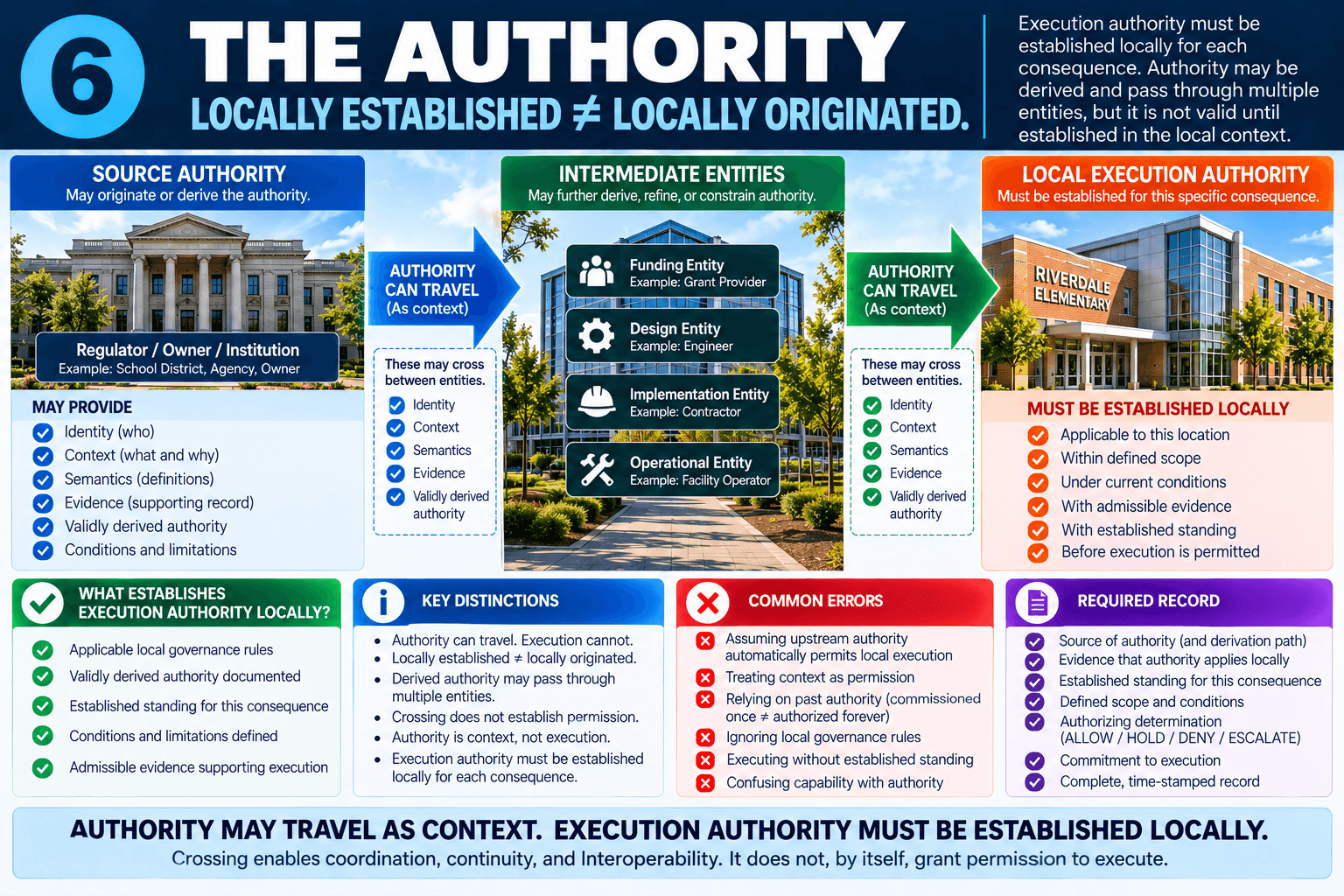
Authority may originate elsewhere and derived authority may traverse multiple entities. The receiver does not manufacture new authority. It establishes whether the authority reaching execution is valid, current, applicable, sufficient and within scope. Locally established does not mean locally originated.
Governance must terminate operationally.
ALLOW. HOLD. DENY. ESCALATE. The examination must produce a bounded disposition rather than vague confidence.
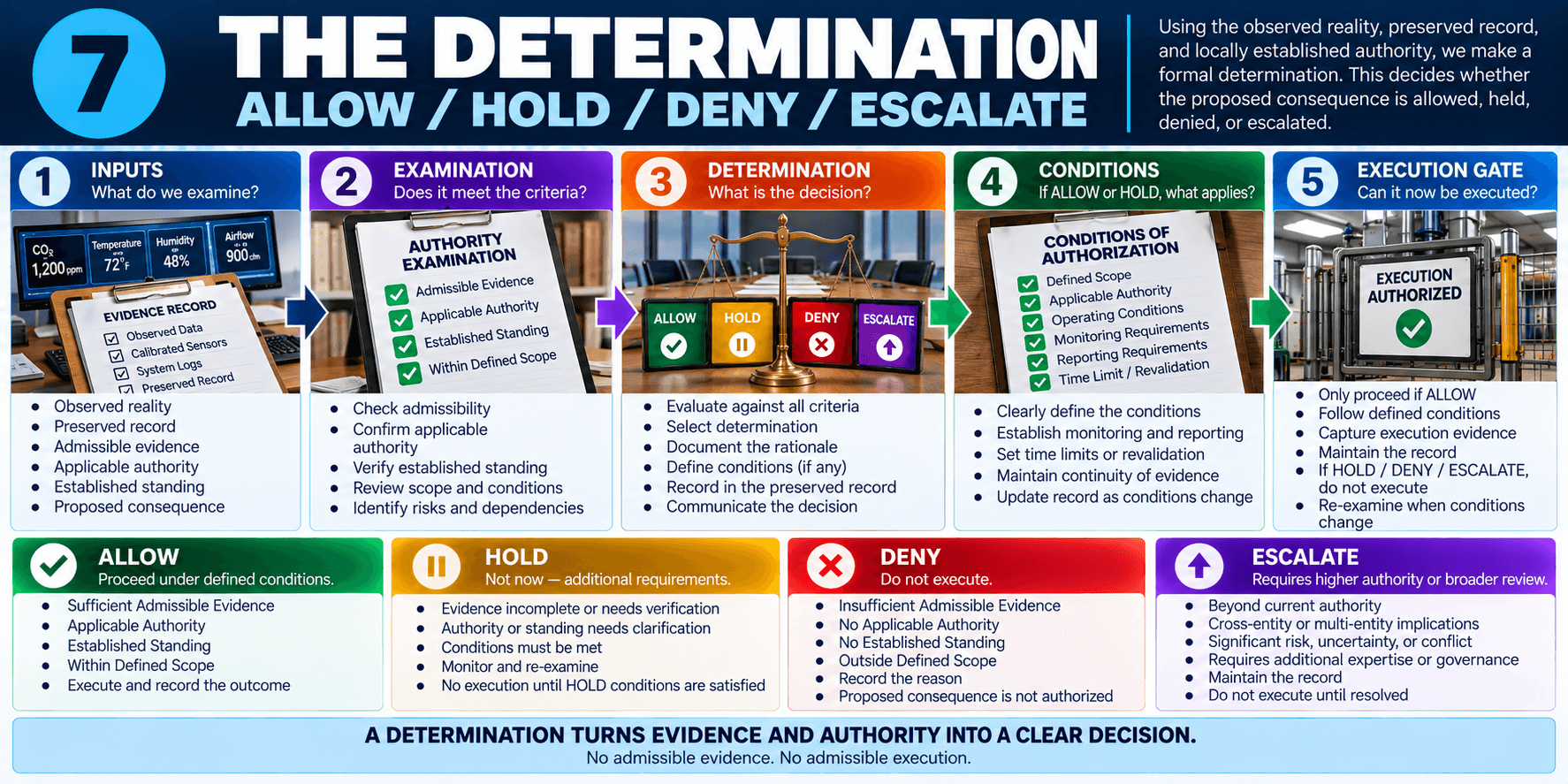
Governance must terminate in an operational disposition. ALLOW, HOLD, DENY or ESCALATE. The purpose is not vague confidence. It is an inspectable determination before a consequence becomes reality.
Execution creates new reality.
Preserve what was executed, what outcome became real, and the new baseline. Proof supports propositions. It does not authorize itself.
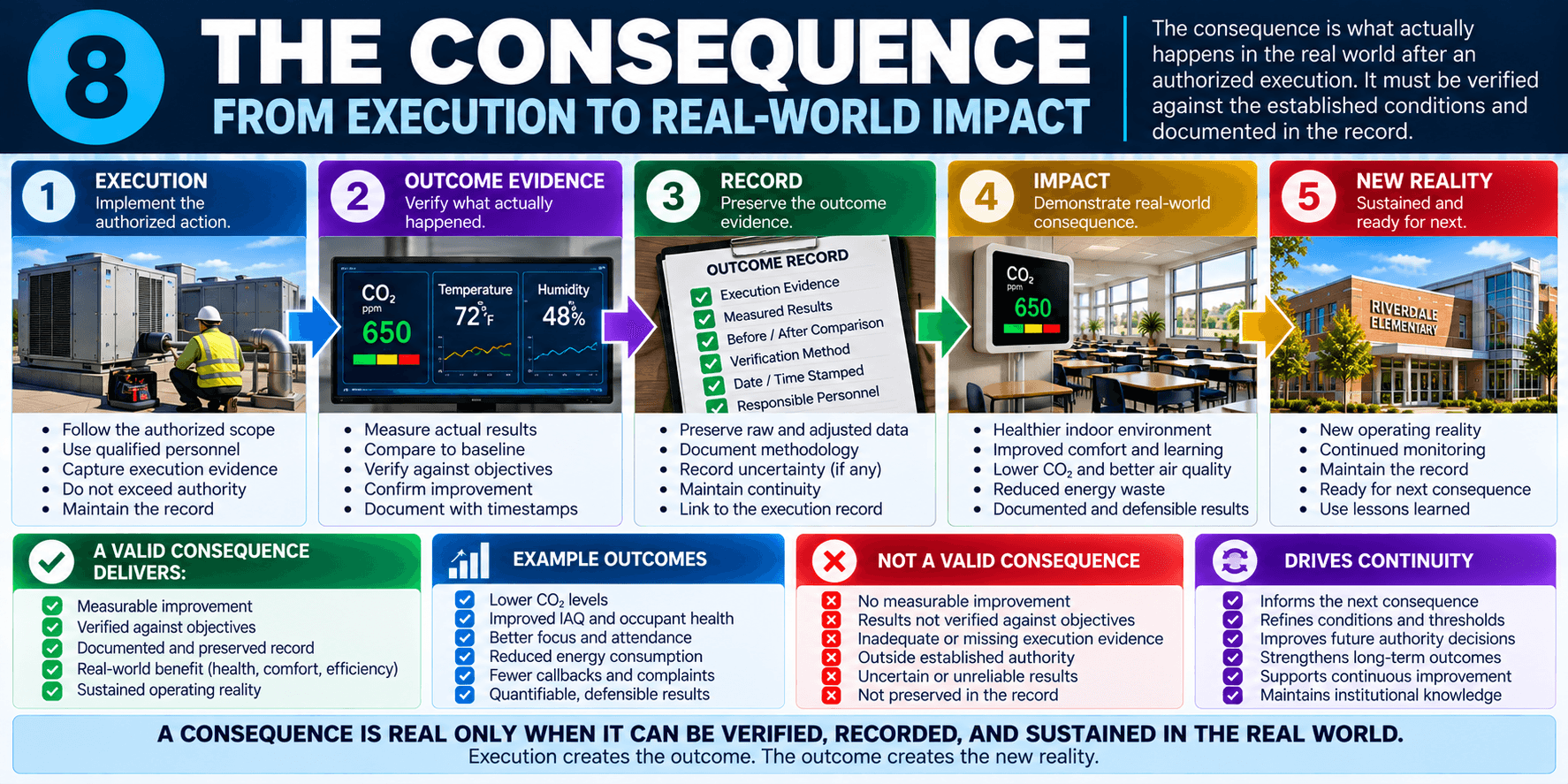
Execution creates outcome, and outcome creates new reality. Preserve what was executed, verify what actually happened, compare it with the baseline, record the result and establish the new reality for the next consequence.
Change the conditions. Watch the disposition move.
Take the examination with you.
The 12-page independent technical reference preserves the full consequence examination: claim, evidence, scope, reality, crossing, authority, determination, consequence, and the governing question.
DOWNLOAD TECHNICAL REFERENCE — PDF →Does this proposed consequence have sufficient Admissible Evidence, Applicable Authority, and Established Standing to become reality NOW?
Bring the proof. Name the proposed consequence. Walk the boundary.